Local business database India: shops, dealers and services by city
Short answer: a local business database is a list of a city's shops, dealers, wholesalers, workshops and service businesses, with category, address, PIN code and a business contact. Distributors, FMCG and consumer-durable companies, banks and lenders, and software companies that sell to shops use it to plan territories and build beat lists for field staff. The fields that matter most are category, locality and PIN code, a working business phone and the source of each contact; use it legally by giving a clear reason, an opt-out in the first contact and honouring every opt-out.
India's local economy runs on businesses that rarely appear in company databases: the kirana store, the hardware dealer in the thok bazaar, the mobile repair shop, the medical store, the tyre dealer, the tailoring unit, the travel agent above the market. Many are proprietorships with no website. Yet they are the customers of most Indian distributors and the target market of many lenders and software companies. This guide explains what a local business database should contain and gives a reusable way to turn it into beats: the PIN-to-Beat method.
Disclosure: this guide is published by LeadSetu, whose Business Directory section covers Indian local businesses by city. The method works with any list, including one your team builds by hand.
Contents
- Who uses a local business database?
- Which fields matter in a local business list?
- Where does local business data come from?
- How to build a beat list with the PIN-to-Beat method
- Worked example: a distributor in a tier-2 city
- How should field teams call, message and visit shops?
- Is it legal to use a local business database?
- Mistakes to avoid
- Quick checklist
- Frequently asked questions
- Sources and method
Who uses a local business database?
Anyone whose buyers are many, small and spread across a city. A list of fifty large companies is no help to a distributor in Indore; he needs every paint dealer and hardware store in four PIN codes.
| Who | What they use it for | Categories they usually start with |
|---|---|---|
| Distributors, stockists and super stockists | Adding outlets to a beat; finding gaps between existing beats | Kirana and general stores, medical stores, hardware, paints, electricals |
| FMCG and consumer-durable companies | Planning reach town by town; appointing distributors in new districts | Retailers, wholesalers, appliance and mobile showrooms |
| Banks, NBFCs and fintech lenders | Merchant loans, current accounts, payment devices and QR onboarding | Shops with steady daily sales: grocery, pharmacy, restaurants, salons |
| Software for shops (billing, stock, GST invoicing) | Demos to owners still on a paper bahi-khata or a basic billing app | Retailers, pharmacies, garment stores, restaurants, service centres |
| Building-material suppliers | Reaching contractors, fabricators and dealers in a district | Hardware, plywood, tiles and sanitaryware, steel traders |
| Local service businesses | Selling printing, signage, pest control or repairs to other businesses | Restaurants, hotels, offices, schools |
Which fields matter in a local business list?
Category, locality and PIN code, full address, a working business phone and the source of each contact decide whether a list can be worked. The rest is helpful but optional.
| Field | Why it matters | What to check |
|---|---|---|
| Category and sub-category | Decides whether the shop buys your product at all | Is "hardware" split from "sanitaryware" and "paints"? |
| Locality and PIN code | Groups outlets into beats a person can cover in a day | Is the PIN code present on most records? |
| Address with a landmark | A field visit fails without it | Does it name the market, road or landmark? |
| Business phone | First contact, by call or WhatsApp | Is it the shop's number, with its source shown? |
| GSTIN, where public | Confirms registration before credit | Check status with a GSTIN checker |
| Source and last-checked date | Lets you answer "where did you get my number?" | Is it on every contact? |
Two fields are rarely in any database and worth adding after the first visit: the owner's preferred language and the hours when a call is welcome. A medical store owner busy from 6 pm to 10 pm will not thank you for an evening call.
Where does local business data come from?
From four kinds of public source, merged so each shop appears once with the source kept on each contact:
- Listings owners publish themselves: online directory and listing pages with a shop phone and address.
- Official registers: the Udyam register for micro and small enterprises, and the GST register for registration status.
- Trade and professional lists: association member lists, dealer locators on manufacturers' websites, licence lists published by regulators.
- The business's own website or social page, for larger dealers and service firms.
LeadSetu's shops and local businesses section is built this way, and the Business Directory shows categories by state, city and PIN code before you sign up. The Directories page describes the trade and professional lists.
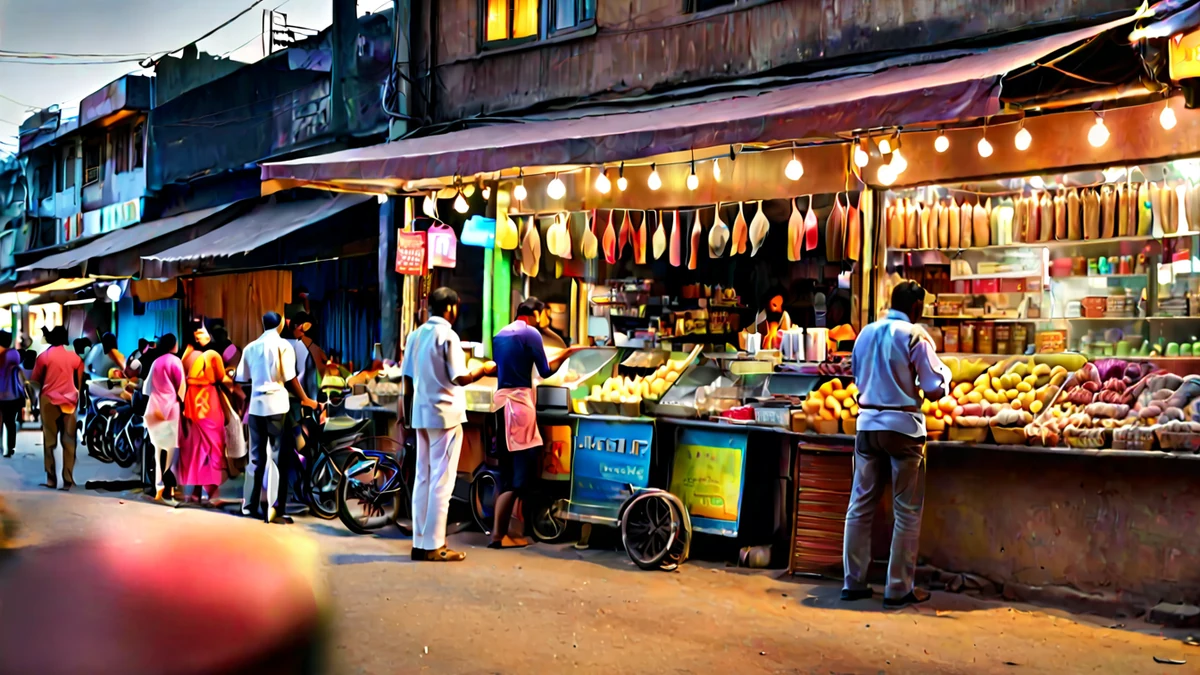
LeadSetu's Shops and local businesses section. Screenshot from 2026; records change daily.
How to build a beat list with the PIN-to-Beat method
A beat is a fixed set of outlets one person visits on one day of the week, in road order. The PIN-to-Beat method turns a city list into beats in five moves: categories, PIN codes, clusters, grading and order.
- Choose the categories that buy your product, and write down the ones that do not so you can filter them out.
- Filter the database to one town and those categories; keep records with a business phone or a full address.
- Group the records by PIN code, then by market or locality within each PIN code (the cloth market, the station road, the industrial estate).
- Grade each outlet A, B or C: A for large or busy outlets you visit weekly, B for steady ones, C for small ones you visit fortnightly or serve by phone order.
- Cut each cluster into beats one person can cover in a day, mixing A, B and C outlets so every beat is worth the trip.
- Order the outlets in each beat along the road, so the day ends near where the next one starts.
- Call each outlet before the first visit, introduce the company and note who is interested.
- Put every outlet into the CRM with its beat, visit day, grade, language and next follow-up date.
- After two rounds of visits, drop closed or unsuitable outlets, regrade the rest and add shops the team finds on the road.
The CRM matters more than the list. A beat plan on paper is forgotten the week a salesperson leaves; in a CRM it keeps the visit history, orders and the reasons a shop said no. Our CRM for small business checklist covers what to look for.
Worked example: a distributor in a tier-2 city
Example (illustrative, not a real business): a newly appointed paints and hardware distributor in a tier-2 city in Madhya Pradesh has one salesperson and wants six beats, Monday to Saturday.
| Beat | Day | Area | Outlet mix | Note |
|---|---|---|---|---|
| 1 | Monday | Old city hardware market | Mostly A and B dealers | Owners arrive late morning; start at 11 |
| 2 | Tuesday | Industrial area and bypass | B fabricators and electrical shops | Call ahead; owners are often on site |
| 3 | Wednesday | New residential colonies | B and C paint and sanitaryware shops | New shops open often; look for them |
| 4 | Thursday | Two nearby towns on the highway | A dealers in each town | Longer travel; fewer, larger outlets |
| 5 | Friday | Station road and wholesale market | A wholesalers and B retailers | Wholesale market is busiest early; go after 12 |
| 6 | Saturday | Calls and repeat orders | C outlets by phone and WhatsApp | No travel; follow-ups and collections |
Outlet numbers per beat depend on travel time and visit length; decide them after the first week, not before.
How should field teams call, message and visit shops?
Briefly, in the owner's language, at a quiet hour, with one concrete offer.
- Call mid-morning, after opening and before the lunch rush; avoid weekly market days and festival weeks such as Diwali and Eid.
- Speak the owner's language: Marathi in Pune, Tamil in Madurai, Gujarati in Rajkot.
- Lead with one offer: a scheme, a margin, a delivery promise or a free demo.
- Use WhatsApp for agreed follow-ups, such as a catalogue or rate list the owner asked for.
- Log every outcome the same day: interested, call back, not a fit, do not contact.
Is it legal to use a local business database?
Yes, for a business purpose and with care for personal data. A shop's name, category, address and business phone are business facts. But many shops are run by one person, and a proprietor's own mobile number is personal data under the Digital Personal Data Protection Act, 2023; India's telemarketing rules on unsolicited commercial communication also apply to promotional calls and messages.
| Do | Do not |
|---|---|
| Make an offer relevant to the shop's trade | Message every shop in a city about something unrelated |
| Say who you are and how to opt out in the first contact | Hide who is calling or why |
| Keep the source of each contact | Use numbers with no known source |
| Honour every opt-out across the whole team | Keep calling a shop that said no |
| Respect DND preferences for promotional calls | Send bulk promotional messages to personal numbers |
Our guide on how to buy B2B data in India legally explains the rules. Anyone can ask to be removed from LeadSetu's data through remove my data, and an opt-out applies for every customer.
Mistakes to avoid
- Building beats by PIN code alone. One PIN code can hold three markets an hour apart in traffic; cluster by market.
- Visiting every outlet equally. Without A, B and C grades, salespeople spend Monday on shops that order twice a year.
- Skipping the pre-call. A cold visit to a busy owner wastes both days.
- Keeping the beat in one salesperson's phone. When he leaves, the beat leaves with him.
- Never pruning. Shops close and change trade; a list not cleaned after two rounds is already stale.
Quick checklist
- Categories that buy (and do not buy) written down
- City filtered; records without phone or address removed
- Outlets grouped by PIN code and then by market
- Every outlet graded A, B or C
- Beats sized to one day, in road order
- Pre-call made, opt-out offered, outcome logged in the CRM
- List reviewed after two rounds of visits
Frequently asked questions
What is a local business database in India?
A list of a city's shops, dealers, wholesalers, workshops and service businesses, with category, address, PIN code and a business contact, used to find and reach local businesses.
How do I get a list of shops in my city?
Filter a local business database by city and category, keep records with a business phone or full address, check them with a first round of calls, and add shops your team finds on the road.
What is the PIN-to-Beat method?
A way to turn a city list into beat plans: choose categories, group outlets by PIN code and market, grade them A, B or C, cut clusters into one-day beats in road order, then pre-call and track everything in a CRM.
Is it legal to call shop owners from a database?
It can be, with a clear business purpose, an introduction, an opt-out, every opt-out honoured and the telemarketing rules followed. A proprietor's own mobile number is personal data under the DPDP Act.
Does LeadSetu cover local businesses outside metros?
The Business Directory covers Indian local businesses by state, city and PIN code. Check the Business Directory or the Data catalogue for your own towns before you sign up.
Sources and method
This guide describes how local business data is built and used in India in general terms. The worked example is illustrative and describes no real business. The legal points are a plain-words summary of the Digital Personal Data Protection Act, 2023 and India's telemarketing rules, and are not legal advice. LeadSetu's local business records come from official registers, published business listings, trade and professional lists and public business websites, and each contact keeps its source. No individual's details appear in this guide.
See the coverage on the Data page, the B2B database India page and the Data catalogue; if you are still comparing providers, use the SOURCED scoring sheet. LeadSetu is one plan with the CRM and the B2B leads together; the price is on the pricing page, and a free trial opens 10 sample records. Share your requirement for a city or category, or contact us. More guides: B2B data guides.
B2B data India Local businesses Field sales B2B data guide AI draft